🇸🇦 Saudi Vision 2030 Healthcare REGULATORY FRAMEWORK FDA Modernization Act 3.0 21st Century Cures Act NCATS Tissue Chip NIH SBIR/STTR DARPA BTO
ARPA-H Precision Health ⚡ LIVE Updated: Dec 30, 2025
EMA 3Rs Initiative ICH S9 Guidelines EPA NAMs Roadmap IND Enabling Studies OECD TG Guidelines China NMPA NAMs UK NC3Rs
Scientific Framework

PATIENT ANALOG

The Foundational Framework for Human Simulation

Framework Designation Established: December 2025
PatientAnalog.com
Organizing the convergence of digital twins, organoids, microphysiological systems, and AI-driven drug discovery into precision medicine's next infrastructure layer.
Independent research and scientific taxonomy initiative.
FDA
Modernization Act 3.0
NIH
NCATS Tissue Chip Program
ARPA-H Infrastructure

Purpose of This Initiative

PatientAnalog.com documents the emerging scientific and regulatory landscape surrounding human simulation technologies. This site serves as an independent research initiative mapping terminology, conceptual frameworks, and infrastructure across digital twins, organoids, microphysiological systems, and AI-driven drug discovery.

Executive Summary

The Patient Analog framework organizes human simulation technologies into a coherent hierarchy—from whole-patient digital representations down through organ analogs, tissue-scale microphysiological systems, and organoids, supported by AI, quantum computing, and next-generation therapeutics. This site synthesizes scientific literature, regulatory developments, and government programs to provide a clear map of this rapidly evolving landscape.

The associated domain labels reflect generic scientific terminology aligned with this framework and may serve as anchors for future infrastructure, standards, or platforms in this space.

Framework Version 1.0 Updated December 2025
$0B
Addressable Market by 2030
0
Integrated Verticals
0%
Sector CAGR (2025-2030)
3.0
FDA Modernization Act (Dec 2025)
Companies

Industry Leaders & Innovators

Emulate, Organovo, InSphero, Hesperos, Recursion, and 100+ leading companies

The human simulation technology landscape includes organ-on-chip pioneers, organoid specialists, AI drug discovery platforms, and digital twin developers. Combined funding exceeds $15 billion.

EMULATE ORGAN-ON-CHIP
Harvard Wyss Institute spinout. FDA-qualified liver and intestine chips. Leading organ-on-chip platform with pharma partnerships including J&J, Roche, Takeda.
Founded: 2014 | HQ: Boston | Funding: $225M+
CN BIO MPS
UK-based multi-organ MPS platform. PhysioMimix systems connect liver, gut, kidney chips. Strong pharma partnerships and NCATS Tissue Chip collaborator.
Founded: 2009 | HQ: Cambridge UK | Funding: $40M+
INSPHERO 3D SPHEROIDS
Swiss 3D microtissue pioneer. Liver, pancreatic islet, and tumor spheroid platforms. High-throughput screening for toxicity and efficacy with major pharma clients.
Founded: 2009 | HQ: Zurich | Funding: $50M+
HESPEROS HUMAN-ON-CHIP
Multi-organ human-on-a-chip systems. Serum-free, pumpless technology. NCATS-funded cardiac, neuromuscular, and immune system platforms.
Founded: 2015 | HQ: Orlando | Funding: $35M+
RECURSION AI DISCOVERY
AI-powered drug discovery using cellular imaging. Generates petabytes of biological data. Partnerships with Roche, Bayer. Acquired Cyclica (2023), Valence Discovery.
Founded: 2013 | HQ: Salt Lake City | Funding: $1B+ | NASDAQ: RXRX
INSILICO MEDICINE AI DISCOVERY
Generative AI for drug design. First AI-discovered drug in Phase 2 trials (IPF). Pharma.AI platform used by AstraZeneca, Fosun Pharma. $95M Series D (2022).
Founded: 2014 | HQ: Hong Kong | Funding: $400M+
ORGANOVO BIOPRINTING
3D bioprinting pioneer. ExVive liver and kidney tissue models. First commercial 3D printed human tissues for drug testing.
Founded: 2007 | HQ: San Diego | Public: ONVO
TISSUSE MULTI-ORGAN
Berlin-based multi-organ-chip company. HUMIMIC platform connects up to 4 organs. Cosmetics and pharma applications. Fraunhofer spinout.
Founded: 2010 | HQ: Berlin | Funding: €30M+
MIMETAS ORGAN-ON-CHIP
OrganoPlate high-throughput organ-on-chip platform. 96-well format for screening. Kidney, gut, brain, and tumor models. Major pharma partnerships.
Founded: 2013 | HQ: Leiden NL | Funding: €45M+

COMPANY LANDSCAPE BY CATEGORY

Organ-on-Chip (25+)
Emulate, CN Bio, Hesperos, TissUse, Mimetas, Nortis, AxoSim, BiomimX, Draper Labs
Organoids (30+)
STEMCELL Tech, HUB, System1 Bio, DefiniGEN, Crown Bio, Champions, SUN bioscience
AI Discovery (40+)
Recursion, Insilico, Exscientia, Schrödinger, Atomwise, BenevolentAI, Isomorphic
Digital Twins (20+)
Twin Health, HeartFlow, Unlearn AI, Dassault (SIMULIA), Siemens Healthineers
Regulatory

Regulatory Framework

FDA Modernization Act, NCATS, EPA NAMs, EMA 3Rs, OECD guidelines, global initiatives

Global regulatory frameworks are accelerating adoption of human simulation technologies. The FDA Modernization Acts 2.0 (2022) and 3.0 (2025) represent watershed moments eliminating mandatory animal testing requirements for drug approval.

🇺🇸 UNITED STATES FEDERAL

🇪🇺 EUROPEAN UNION

🌏 ASIA-PACIFIC

🇸🇦 MIDDLE EAST

FDA-QUALIFIED NAM PLATFORMS

🫁
Liver-Chip
Emulate (2022)
🫀
Intestine-Chip
Emulate (2022)
🧫
3D Liver Model
CN Bio (2023)
🔬
Skin Model
MatTek (OECD)
Technologies

Core Technologies

Organ-on-chip, organoids, digital twins, iPSC, microphysiological systems, and NAMs

Human simulation technologies represent a convergence of bioengineering, stem cell biology, microfluidics, and computational modeling. These platforms enable unprecedented insights into human physiology and drug response.

ORGAN-ON-CHIP
Microfluidic devices containing living human cells that replicate organ-level physiology. FDA-qualified platforms from Emulate, CN Bio, and TissUse enable ADME-Tox studies, disease modeling, and personalized medicine applications.
Market: $294M (2024) → $1.8B (2030)
ORGANOIDS
Self-organizing 3D tissue structures derived from stem cells that recapitulate organ architecture and function. Brain, liver, kidney, and tumor organoids enable drug screening, disease modeling, and regenerative medicine research.
Market: $2.1B (2024) → $7.8B (2030)
DIGITAL TWINS
Computational models integrating patient-specific genomic, proteomic, and clinical data to simulate drug response and disease progression. AI-powered platforms enable virtual clinical trials and treatment optimization.
Market: $3.2B (2024) → $35B (2030)
iPSC TECHNOLOGY
Induced pluripotent stem cells enable generation of patient-specific cell types for disease modeling and drug testing. Nobel Prize-winning technology (2012) now powers personalized medicine and cell therapy development.
Market: $2.8B (2024) → $8.5B (2030)
MICROPHYSIOLOGICAL SYSTEMS
Multi-organ platforms connecting liver, heart, kidney, and other tissue chips via microfluidic circulation. NCATS Tissue Chip program has funded 70+ MPS projects for systemic toxicity and efficacy testing.
NCATS Investment: $200M+ since 2012
NEW APPROACH METHODOLOGIES
FDA-recognized alternatives to animal testing including in vitro assays, computational models, and organ chips. FDA Modernization Act 2.0/3.0 removes animal testing requirements, accelerating NAM adoption.
FDA Modernization Act 3.0: Dec 2025

KEY TECHNOLOGY PLATFORMS

Liver Chips
DILI prediction, metabolism, CYP450 induction
Heart Chips
Cardiotoxicity, QT prolongation, contractility
Kidney Chips
Nephrotoxicity, drug transport, filtration
Brain Chips
BBB permeability, neurotoxicity, CNS drugs
Lung Chips
Pulmonary toxicity, inhalation, COPD/asthma
Gut Chips
Absorption, microbiome, intestinal barrier
Skin Chips
Dermal absorption, wound healing, cosmetics
Tumor Chips
Oncology, immunotherapy, metastasis
Interactive Experience

3D Visualization Lab

Explore interactive organoid and organ-on-chip models with real-time manipulation

Engage with cutting-edge human simulation technologies through our interactive 3D visualization laboratory. These models demonstrate the structural complexity of organoids and the engineering precision of organ-on-chip platforms. AR/VR Ready

Interactive 3D Model

Initializing 3D Organoid Model...

Brain Organoid Model

Rotate • Zoom • Click cells for details

Microfluidic Chip

Initializing Multi-Organ Chip...

Multi-Organ Chip Platform

6 organ chambers • Microfluidic flow visualization

Technology Gallery

Organ-on-Chip
pH: 7.4 | O₂: 98% | Flow: 2.3μL/min
Multi-Organ Microfluidic Chip
PDMS substrate with 6 interconnected organ chambers and continuous media flow
Organoid
Ø: 2.4mm | Viability: 94% | Day: 21
Brain Organoid Structure
Self-organizing 3D tissue with stem cells, neurons, and supporting cells
Lab Setup
Temp: 37°C | CO₂: 5% | Humidity: 95%
MPS Laboratory Setup
Incubator, confocal microscope, and microfluidic pump system
Digital Twin
Sync: Real-time | Accuracy: 99.2%
72
Heart
Active
Brain
98%
Liver
Virtual Patient Model
AI-powered digital twin with real-time organ simulation and drug response prediction
Real Imaging
Resolution: 0.2μm | Z-Stack: 50 slices
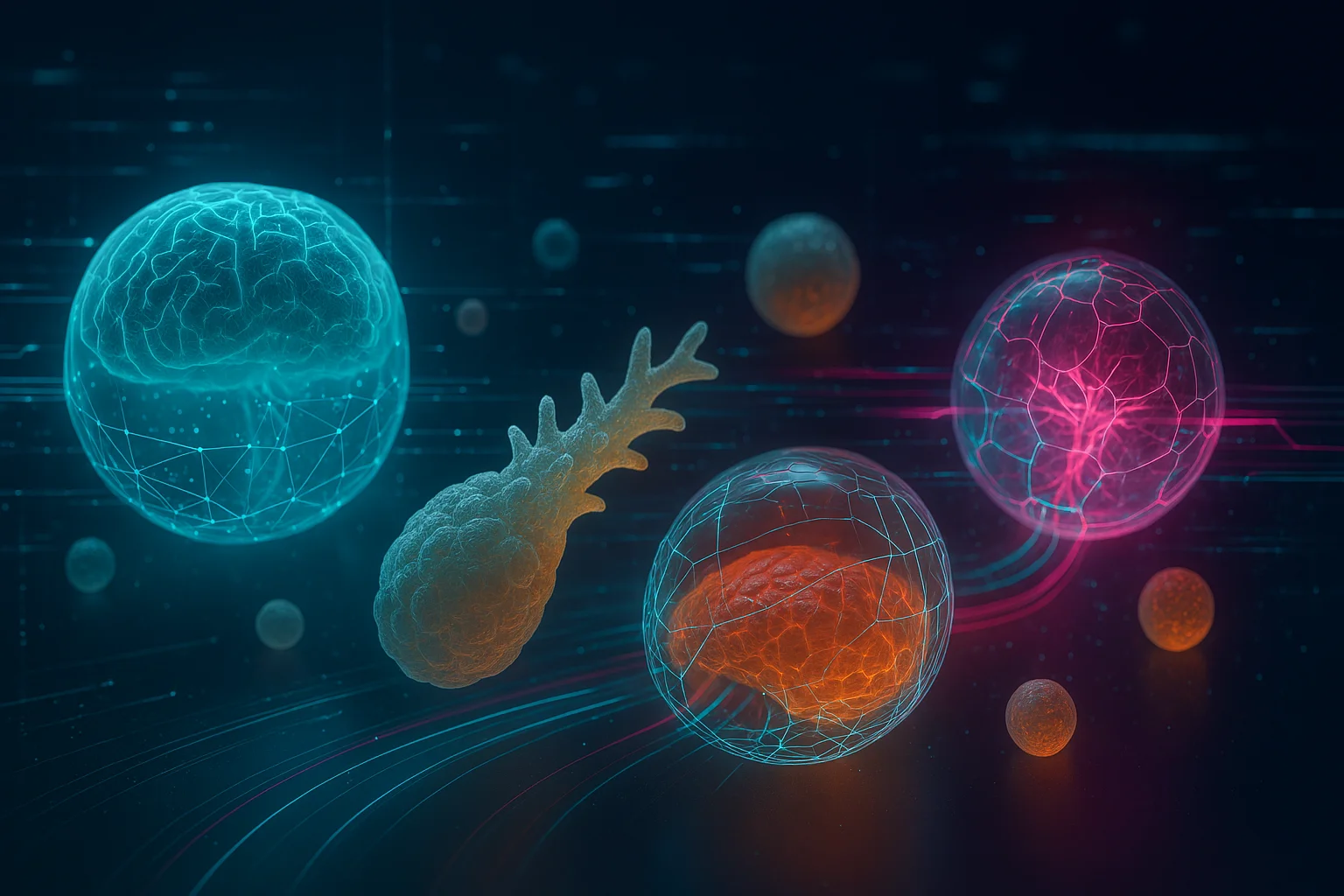
Neural organoids and stem cells in digital visualization
Neural Organoid Network
Multi-lineage organoids showing neural (cyan), hepatic (orange), and cardiac (pink) differentiation pathways
Lab Culture
Passage: P5 | Confluence: 85% | Media: DMEM
Organoids growing in petri dish culture
Organoid Culture Plate
Patient-derived organoids at various maturation stages - liver (brown), tumor (red), intestinal (orange), neural (white)

Advanced Biomarker Visualization

Real-time 3D visualization of circulating biomarkers, protein structures, AI predictions, and quantum computing applications in drug discovery.

Liquid Biopsy

Initializing ctDNA Bloodstream Simulation...

ctDNA Particle Flow

KRAS • BRAF • EGFR • TP53 biomarker detection

Structural Biology

Loading Protein Structure...

Kinase Structure

α-helix • β-sheet • Random coil secondary structures

AI/ML Engine

Initializing Neural Network...

Drug Toxicity Predictor

Transformer model • Efficacy • Toxicity • ADME prediction

Quantum Computing

Initializing Quantum Circuit...

Quantum State Visualizer

8 qubits • Bloch spheres • Entanglement • Measurement

KIDS EDUCATIONAL PROGRAM - Science Discovery Zone ============================================ -->
🎓 Kids Zone

Science Discovery Zone

Learn about amazing technologies that help scientists create medicines without testing on animals! 🧬🔬

Welcome, young scientist! 🚀 Explore how real scientists are building tiny organs, computer simulations, and amazing chips to help people get better medicines faster. Complete challenges to earn points and see your name on the leaderboard!

🌟 Your Score 0
🏆 High Score 0
✅ Completed 0/6
🔬

Organ-on-a-Chip

What is it? A tiny chip (smaller than your thumb!) that has real human cells inside. The cells act just like organs in your body - a mini lung, heart, or liver!

🎯 Fun Fact: These chips can breathe, pump, and even get "sick" like real organs!

Not Started
🧫

Organoids

What is it? Mini organs grown from stem cells! They're like tiny 3D balls made of real human cells that organize themselves into brain, gut, or kidney structures.

🎯 Fun Fact: Brain organoids can even make electrical signals like a real brain!

Not Started
💻

Digital Twins

What is it? A computer copy of a real person! Scientists can test medicines on the digital twin to see what might happen before giving it to real patients.

🎯 Fun Fact: Digital twins can explore how biological systems may respond under controlled assumptions to medicine!

Not Started
🧬

iPSC Stem Cells

What is it? Scientists can turn a regular skin cell back into a "super cell" that can become ANY type of cell - heart, brain, liver, anything!

🎯 Fun Fact: The scientist who discovered this won a Nobel Prize in 2012!

Not Started
⚛️

Quantum Computers

What is it? Super-powerful computers that use quantum physics to solve problems regular computers can't. They help find new medicines incredibly fast!

🎯 Fun Fact: A quantum computer can try millions of medicine combinations at once!

Not Started
🫀

Body-on-a-Chip

What is it? Multiple organ-chips connected together to act like a whole human body! Scientists can see how medicine travels through ALL organs at once.

🎯 Fun Fact: One body-on-chip can replace testing on hundreds of animals!

Not Started

🏆 Science Champions Leaderboard

🥇 Future Scientist 0
🥈
🥉

🎮 Interactive Challenges

Science

Research & Science

Brain organoids, liver toxicity, cardiac safety, tumor models, assembloids, and more

Cutting-edge research applications driving the adoption of human simulation technologies across therapeutic areas. From neuroscience to oncology, these models are transforming drug discovery.

🧠 BRAIN ORGANOIDS & NEUROSCIENCE
Cerebral organoids recapitulate human brain development and disease. Applications include:
  • Alzheimer's and Parkinson's disease modeling
  • Autism spectrum disorder research
  • Zika virus and infectious disease studies
  • Blood-brain barrier permeability testing
  • Schizophrenia and psychiatric drug development
Key Players: STEMCELL Technologies, System1 Bio, Axol Bioscience
🫀 CARDIAC SAFETY & CARDIOTOXICITY
Heart-on-chip and cardiac organoids for safety pharmacology:
  • QT prolongation and arrhythmia prediction
  • Drug-induced cardiotoxicity screening
  • Heart failure and cardiomyopathy models
  • Contractility and electrophysiology analysis
  • CiPA (Comprehensive in vitro Proarrhythmia Assay)
Key Players: Emulate, TARA Biosystems, Ncardia
🫁 LIVER TOXICITY & DILI
Drug-induced liver injury (DILI) remains top cause of drug withdrawal:
  • Hepatotoxicity prediction and screening
  • CYP450 metabolism and drug interactions
  • Bile acid transport and cholestasis
  • NASH/NAFLD disease modeling
  • Liver fibrosis and cirrhosis studies
Key Players: CN Bio, InSphero, Organovo, HµREL
🎯 TUMOR MODELS & ONCOLOGY
Patient-derived tumor organoids for precision oncology:
  • Chemotherapy and immunotherapy screening
  • Tumor microenvironment modeling
  • Metastasis and invasion studies
  • CAR-T and cell therapy development
  • Personalized treatment selection
Key Players: Crown Bioscience, Champions Oncology, HUB Organoids
🔬 ASSEMBLOIDS & MULTI-TISSUE
Connected organoid systems for systemic biology:
  • Cortico-striatal assembloids (brain circuit modeling)
  • Gut-liver-kidney connected systems
  • Neuromuscular junction models
  • Vascularized organoid development
  • Immune system integration
Key Players: Stanford (Pasca Lab), Harvard (Bhattacharya Lab)
🧬 KIDNEY & NEPHROTOXICITY
Kidney organoids and chips for renal safety assessment:
  • Drug-induced nephrotoxicity screening
  • Proximal tubule transport studies
  • Polycystic kidney disease modeling
  • Glomerular filtration assessment
  • Diabetic nephropathy research
Key Players: Nortis, Draper Labs, Takasago

RESEARCH PUBLICATION GROWTH

12,000+
Organoid papers (2024)
3,500+
Organ-on-chip papers
45%
YoY publication growth
500+
Clinical trials using NAMs
The Patient Analog framework presented here is an original conceptual model developed to organize and contextualize emerging human simulation technologies.

A New Foundation for Human Simulation

A Patient Analog is the unified biological-computational representation of human physiology, integrating organoids, microphysiological systems, organ-on-chip platforms, multi-omics, and simulation engines into a single modeling substrate.

This hierarchy progresses from biological substrates to fully integrated, simulation-ready human models — establishing the foundational infrastructure that will define the next era of drug discovery and precision medicine.

  • The Human The biological reality above all modeling frameworks
  • Patient Analog Highest-fidelity integrated model of human biology
  • System Analog Multi-organ physiological subsystems
  • Organ Analog Individual organ modeled at high fidelity
  • Tissue / MPS Engineered microphysiological systems
  • Organoid 3D cell cultures mimicking organ structure
The Human
Patient Analog

Patient Analog

The apex integration layer. Combines all subsystems into a unified, patient-specific simulation model.

System Analog

System Analog

Cardiovascular, immune, metabolic, and neuro-endocrine networks operating as coherent physiological systems.

Organ Analog

Organ Analog

Heart, liver, kidney, lung — individual organs modeled at high fidelity for drug response prediction.

Tissue / MPS

Tissue / MPS

Organ-on-chip microfluidic systems with perfusion, biosensors, and electrophysiology integration.

Organoid

Organoid

Patient-derived 3D cell cultures that self-organize into organ-like structures for personalized testing.

Research Hub

Explore the Framework

142 pages of comprehensive research across human simulation technologies

Industry Catalyst

The $2.6 Billion Problem

Why the industry is racing toward human simulation infrastructure

This section summarizes the economic and regulatory pressures driving the shift from animal models to human-relevant platforms such as organoids, organ-on-chip, and digital twins.

0%
Drug Failure Rate
9 out of 10 drugs that pass animal testing fail in human clinical trials
$2.6B
Cost Per Drug
Average cost to bring a single drug to market (2024 estimate)
10-15
Years to Market
Average drug development timeline
3.0
FDA Modernization Act
Senate passed Dec 16, 2025 — NAMs now standard for nonclinical testing

The Regulatory Shift: 2022–2025

On December 29, 2022, President Biden signed the FDA Modernization Act 2.0 into law, ending the 1938 mandate requiring animal testing for all new drugs. For the first time in 85 years, the FDA began accepting organoids, microphysiological systems, digital twins, and AI-based models as legitimate alternatives for establishing drug safety and efficacy.

On December 16, 2025, the U.S. Senate unanimously passed FDA Modernization Act 3.0, directing the FDA to replace "animal" with "nonclinical" in Title 21 regulations within one year. This landmark legislation makes New Approach Methodologies (NAMs) the default pathway for drug safety assessment.

In December 2025, the FDA also released draft guidance on streamlining nonclinical safety studies for monoclonal antibodies, proposing weight-of-evidence approaches that could eliminate routine animal toxicity studies.

Major Players Are Moving (2024–2025)

Roche Hans Clevers (pioneer of organoids) now leads Pharma R&D
Novartis Multi-year collaboration with Schrödinger for computational drug discovery
Pfizer Major biotech M&A activity in Q4 2025, including obesity therapeutics acquisition
Insilico Medicine Pharma.AI Q4 2025 launch — expanded LLM-based target prioritization
GSK Accelerated RSV trials by 2 years using predictive digital modeling

The Emerging Paradigm: Clinical Trials in a Dish

The convergence of iPSC-derived organoids, cell villages, and AI/ML models has created a new paradigm: the ability to conduct "clinical trials in a dish" — pooling cell lines from diverse patient populations to predict drug response before human trials begin. This approach captures human variability that animal models fundamentally cannot replicate.

December 2025 milestone: Researchers announced automated methods for growing lung organoids, promising faster drug testing and reduced animal reliance. Meanwhile, brain organoids have reached unprecedented complexity, prompting new ethical discussions about advanced neural models.

2025 Market Projections

Sector 2025 2030 CAGR
Digital Twins (Healthcare) $21B $73B 28%
Organoids $2.8B $8.5B 25%
Organ-on-Chip / MPS $952M $4.5B 36%
AI Drug Discovery $8.2B $41B 38%
Total Addressable Market $127B+ 35%+
Market Momentum

2025's $500M+ in biotech M&A activity signals contested infrastructure. Leading institutions are securing simulation nomenclature and platform positioning ahead of regulatory standardization cycles.

"Simulation portfolios define the decade." — Industry analysis, Q4 2025

Federal Initiatives

Government & Institutional Programs

Key federal investments driving human simulation technology development

This section highlights key public programs and agencies (NIH, FDA, DARPA, ARPA-H, EU initiatives) shaping the adoption of human simulation technologies.

NIH NCATS
Tissue Chip for Drug Screening
Multi-phase program developing human tissue chips that accurately model the structure and function of human organs. Funding supports organ-on-chip development for safety testing, efficacy studies, and disease modeling.
Launched 2012 | $250M+ invested (updated 2025)
FDA
Alternative Methods Program
FDA initiative advancing New Approach Methodologies (NAMs) including in vitro, in silico, and organ-on-chip technologies for regulatory decision-making. Develops qualification pathways for non-animal alternatives.
FDA Modernization Act 2.0 Implementation
DARPA
Microphysiological Systems Program
Defense research program developing interconnected organ-on-chip platforms that replicate human physiology for rapid testing of medical countermeasures against biological and chemical threats.
Warfighter protection applications
ARPA-H
Advanced Health Research
New agency within HHS focused on breakthrough health technologies. Priority areas include digital health tools, personalized medicine platforms, and accelerated drug development technologies.
Established 2022 | $2.5B initial funding
EU
Horizon Europe MPS Initiative
European Commission programs funding organ-on-chip research, standardization efforts, and regulatory science. CEN/CENELEC working group developing international standards for MPS technologies.
€100M+ in MPS research funding
NASA
Tissue Chips in Space
International Space Station research program using microgravity to accelerate disease modeling in organ-on-chip systems. Studies aging, muscle wasting, and immune dysfunction.
ISS National Lab partnership
JAPAN PMDA
New Approach Methodologies Initiative

Japan's Pharmaceuticals and Medical Devices Agency advancing alternative testing methods. Ongoing collaboration with FDA and EMA on MPS validation frameworks.

Ongoing • $50M+ Annual Budget

Market

Market Intelligence

$127B+ TAM, 31% CAGR, funding trends, geographic analysis, and forecasts

The human simulation technology market is experiencing unprecedented growth driven by regulatory tailwinds, pharma adoption, and technological advances. Combined TAM approaches $127 billion by 2030.

$127B+
Total Addressable Market
Combined human simulation 2030
31%
Weighted CAGR
2024-2030 market growth
$15B+
Venture Funding
Cumulative investment 2015-2024
500+
Active Companies
Global industry participants

MARKET SEGMENTS & PROJECTIONS

Organ-on-Chip 40% CAGR
$294M (2024) → $1.8B (2030)
Key: Emulate, CN Bio, TissUse, Mimetas
Organoids 22% CAGR
$2.1B (2024) → $7.8B (2030)
Key: STEMCELL, HUB, Crown Bio, DefiniGEN
AI Drug Discovery 45% CAGR
$4.0B (2024) → $42B (2030)
Key: Recursion, Insilico, Exscientia, Schrödinger
Digital Twins (Healthcare) 68% CAGR
$3.2B (2024) → $35B (2030)
Key: Twin Health, HeartFlow, Siemens, Dassault

GEOGRAPHIC DISTRIBUTION

🇺🇸
45%
North America
🇪🇺
28%
Europe
🇨🇳
18%
Asia-Pacific
🇸🇦
5%
Middle East
🌍
4%
Rest of World

MAJOR FUNDING ROUNDS (2023-2025)

Recursion: $150M (2024)
Insilico: $95M Series D
Schrödinger: IPO $617M
Emulate: $82M Series E
Exscientia: IPO $510M
Isomorphic Labs: Alphabet subsidiary
CN Bio: $18M Series B
DefiniGEN: $40M Series B
System1 Bio: $35M Series A
Patient Analog

Whole-Patient Simulation

Integrated multi-system models of complete human physiology

Patient Analog platforms integrate all organ systems, multi-omics data, and AI simulation into unified patient-specific models for drug response prediction.

The highest fidelity representation of human biology for drug response prediction and personalized medicine. Market: $21B (2025) → $73B by 2030 at 28% CAGR.

Market Intelligence

Segment Growth Rates

40%
MPS CAGR
Microphysiological systems market through 2030
22%
3D Biology CAGR
Organoid and 3D culture market growth
45%
AI/ML CAGR
AI drug discovery market expansion
68%
Computational CAGR
Digital twin & simulation growth
System Analog

Multi-Organ System Models

Integrated models of interconnected physiological systems

System Analog models represent multi-organ interactions — cardiometabolic, neuroendocrine, immune, and renal-hepatic axes. This layer bridges whole-patient simulation with individual organ models.

System-level modeling captures cross-organ dynamics that single-organ models cannot represent: gut-liver axis metabolism, cardio-renal syndrome, neuroimmune interactions, and endocrine feedback loops. Multi-organ microphysiological systems (MPS) are the core technology enabling this layer.

Organ Analog

Individual Organ Digital Twins

High-fidelity models of specific organs for targeted drug testing

Organ-specific digital twins enable precise modeling of drug metabolism, toxicity, and therapeutic response at the individual organ level. Critical infrastructure for DILI prediction, cardiotoxicity testing, and nephrotoxicity screening.

Tissue / MPS

Microphysiological Systems

Organ-on-chip and engineered tissue platforms

Microphysiological systems (MPS) provide physiologically relevant tissue models with microfluidic perfusion, biosensor integration, and multi-tissue connectivity. NCATS Tissue Chip program and FDA qualified platforms leading adoption. Market: $1.8B by 2030.

PERFUSION ACTIVE
Organoid

Organoid Medicine

Patient-derived 3D cellular models

Organoids are self-organizing 3D cell cultures that recapitulate organ structure and function. Patient-derived organoids enable personalized drug testing and disease modeling with genetic fidelity. NIH NCATS priority under FDA Modernization Act 2.0. Market: $4.2B by 2028.

ENABLING INFRASTRUCTURE
Technology platforms that power the biological stack
AI & Compute

AI & Computational Biology

Machine learning platforms for drug discovery

AI-driven computational biology accelerates drug discovery through multi-omics integration and predictive modeling. NIH, DARPA, and ARPA-H invest heavily in AI drug discovery platforms. Market: $12.7B by 2028, 40% CAGR.

Quantum Computing

Quantum & Advanced Computing

Next-generation platforms for molecular simulation

Quantum computing enables molecular simulation at unprecedented scale and accuracy for drug discovery. DARPA, DOE, and private investment accelerating quantum drug discovery. Market: $2.2B by 2030, 56% CAGR.

Specialized Platforms

Specialized Platforms

Drug screening, chip systems, and advanced biotech infrastructure

APPLICATION DOMAINS
Therapeutic and diagnostic outputs of the framework
Therapeutics

Next-Generation Therapeutics

Cell therapy, gene editing, and regenerative medicine

Advanced therapeutics including CAR-T, gene editing, and mRNA vaccines represent precision medicine's future. Cell therapy market: $23.5B by 2030. Gene therapy: $19.7B by 2030. mRNA therapeutics: $15B by 2030.

Biomarkers

Biomarkers & Glycobiology

Metabolic biomarkers and glycan therapeutics

Biomarker discovery and glycobiology represent critical infrastructure for precision diagnostics and novel therapeutic targets. Adipokine and glycan-based therapeutics market expanding rapidly with obesity and metabolic disease focus.

GLOBAL EXPANSION
International market positioning and IDN infrastructure
Global Expansion

Global Market Positioning

Arabic & Chinese terminology for international research alignment

🇸🇦

Saudi Vision 2030 Healthcare Transformation

$64B investment in precision medicine, genomics, and biotech infrastructure

Saudi Arabia's Vision 2030 economic diversification program allocates substantial capital to healthcare innovation, targeting leadership in precision medicine, regenerative therapies, and AI-driven drug discovery. Arabic scientific terminology supports linguistic infrastructure for Gulf Cooperation Council (GCC) research collaboration—relevant for institutions navigating Riyadh's sovereign biotech initiatives including KAUST partnerships, PIF healthcare investments, and NEOM's health city development.

Asia-Pacific: 40% of global biotech investment with China, Japan, South Korea leading precision medicine adoption. Chinese scientific terminology enables research collaboration within $87B regional market. Middle East: GCC healthcare market $84B by 2030, Arabic terminology relevant for regulatory alignment and international partnerships.

Future Outlook

The Convergence Ahead

Where the industry is heading 2025-2030

2025

Regulatory Acceleration

FDA and NIH roadmap for validation and standardization of MPS/organoid systems in regulatory frameworks takes effect. European CEN/CENELEC Organ-on-Chip Focus Group publishes harmonization priorities.

2026

AI-First Drug Discovery

First FDA-approved drug discovered entirely through AI and human simulation platforms expected. Insilico Medicine's INS018_055 (first AI-designed Orphan Drug) in advanced trials.

2027

Digital Twin Integration

Multi-organ digital twins achieve clinical validation. Patient-specific virtual clinical trials become standard for early-phase development. Market reaches $73B.

2028

Organoid Medicine Matures

Patient-derived organoid biobanks integrated into standard oncology workflows. Personalized drug testing from biopsy-to-treatment in under 14 days. Market: $4.2B.

2030

The Patient Analog Era

Full integration of digital twins, organoids, MPS, and AI creates unified patient simulation platforms. Virtual humans reduce clinical trial timelines by 50%. Animal testing becomes exception, not rule.

"The FDA Modernization Act 2.0 has paved the way for alternative methods to bolster the preclinical data pipeline, aiming to reduce the dependence on animal models that have frequently resulted in therapeutic dead ends."
— Journal of Clinical Investigation, November 2023

Key Literature & Regulatory Sources

U.S. Congress. "FDA Modernization Act 2.0" — Public Law 117-328, Section 3209. December 29, 2022
Ingber DE. "Human organs-on-chips for disease modelling, drug development and personalized medicine." Nature Reviews Genetics, 2022
Low LA, Mummery C, Berridge BR, et al. "Organs-on-chips: into the next decade." Nature Reviews Drug Discovery, 2021
Kim H, Kamm RD, Vunjak-Novakovic G, Wu JC. "Progress in multicellular human cardiac organoids for clinical applications." Cell Stem Cell, 2022
Clevers H. "Modeling Development and Disease with Organoids." Cell, 2016
Cho S, Discher DE, Leong KW, et al. "Challenges and opportunities for the next generation of cardiovascular tissue engineering." Nature Reviews Cardiology, 2023
Marshall LJ, Bailey J, Cassotta M, et al. "Poor translatability of biomedical research using animals—a narrative review." Alternatives to Laboratory Animals, 2023
Yamanaka S. "Induction of Pluripotent Stem Cells from Mouse Embryonic and Adult Fibroblast Cultures." Cell, 2006 (Nobel Prize 2012)
NIH NCATS. "Tissue Chip for Drug Screening Program." National Center for Advancing Translational Sciences, 2012-present
FDA. "Advancing New Alternative Methodologies at FDA." FDA Center for Drug Evaluation and Research, 2024
European Commission. "CEN/CENELEC Organ-on-Chip Standardization Roadmap." European Committee for Standardization, 2024
Ewart L, Apostolou A, Briggs SA, et al. "Performance assessment and economic analysis of a human Liver-Chip for predictive toxicology." Communications Medicine, 2022
Scientific Glossary

Key Concepts & Definitions

Standard scientific terminology in human simulation research

This glossary provides standardized definitions for terminology used throughout the Patient Analog framework. All terms represent generic scientific vocabulary.

Patient Analog

A proposed unified framework integrating digital twins, organoids, and computational models into a single patient-specific simulation substrate. Represents the highest fidelity model of human biology for drug response prediction.

Framework proposed by this research initiative

Digital Twin

A virtual representation of a physical system that uses real-time data, simulation, and machine learning to mirror its physical counterpart. In medicine, digital twins model patient physiology for treatment optimization.

Source: FDA Digital Health Center of Excellence

Organoid

Three-dimensional, self-organizing cellular structures derived from stem cells that recapitulate the architecture and function of human organs. Used for disease modeling and drug testing.

Source: Nature Reviews Molecular Cell Biology

Microphysiological System (MPS)

Engineered microfluidic cell culture devices that recapitulate organ-level physiology, including tissue-tissue interfaces, mechanical forces, and fluid flow. Also known as "organs-on-chips."

Source: NIH NCATS Tissue Chip Program

Organ-on-Chip

Microfluidic devices containing living human cells arranged to simulate tissue and organ-level physiology. Enable drug testing in conditions that mimic the human body.

Source: Wyss Institute, Harvard University

iPSC (Induced Pluripotent Stem Cell)

Adult cells reprogrammed to an embryonic-like pluripotent state, capable of differentiating into any cell type. Nobel Prize-winning technology enabling patient-specific disease models.

Source: Yamanaka, Cell 2006 (Nobel Prize 2012)

Clinical Trial in a Dish

Methodology using pooled iPSC-derived cell populations from diverse patients to predict drug response variability before human trials, capturing population-level pharmacogenomic differences.

Source: Journal of Clinical Investigation, 2023

FDA Modernization Act 2.0

Landmark 2022 legislation removing the 1938 mandate requiring animal testing for drug approval. Permits organoids, MPS, digital twins, and AI as alternatives for demonstrating drug safety and efficacy.

Source: Public Law 117-328, Section 3209

New Approach Methodologies (NAMs)

FDA-recognized technologies and methodologies that provide information on chemical hazard and risk assessment without the use of animals. Includes in vitro, in silico, and organ-on-chip methods.

Source: FDA Center for Drug Evaluation and Research

NCATS Tissue Chip Program

NIH National Center for Advancing Translational Sciences initiative developing human tissue chips for disease modeling, drug safety, and efficacy testing. Funds multi-organ MPS development.

Source: NIH National Center for Advancing Translational Sciences

Multi-Omics

Integration of multiple "omics" datasets—genomics, proteomics, metabolomics, transcriptomics—to create comprehensive biological profiles for systems-level understanding of disease and drug response.

Source: Nature Methods

Pharmacogenomics

Study of how genetic variation affects drug response. Enables prediction of drug efficacy and adverse reactions based on patient genotype, forming the foundation of precision medicine.

Source: FDA Pharmacogenomics Guidance

What This Is

  • An independent research and conceptual framework initiative
  • A scientific taxonomy for emerging human simulation technologies
  • An educational resource mapping terminology, programs, and infrastructure
  • Documentation of the convergence between digital twins, organoids, MPS, and AI
  • A synthesis of publicly available scientific literature and regulatory developments

What This Is Not

  • A provider of medical, diagnostic, or therapeutic services
  • A commercial clinical platform or regulated medical product
  • An affiliate, representative, or agent of any company, government agency, or institution
  • A substitute for professional medical, legal, or scientific advice
  • Endorsed by or affiliated with any referenced organizations
Research Methodology

How This Framework Was Developed

Systematic analysis of the emerging human simulation technology landscape

This section describes how sources were selected, how concepts were grouped, and how the Patient Analog framework was constructed as a scientific taxonomy.

01

Literature Review

Comprehensive analysis of peer-reviewed publications from Nature, Cell, Science, and specialized journals including Nature Reviews Drug Discovery, Cell Stem Cell, and Alternatives to Laboratory Animals. Focus on emerging technologies cited in FDA Modernization Act 2.0/3.0 legislative record.

02

Regulatory Analysis

Review of FDA guidance documents, NIH NCATS Tissue Chip Program publications, European Medicines Agency innovation initiatives, and international standardization efforts (CEN/CENELEC, ISO) related to New Approach Methodologies (NAMs).

03

Taxonomy Development

Creation of the Patient Analog hierarchical framework based on biological complexity levels: from basic organoids through tissue systems, organ models, system-level integration, to complete patient-specific simulations. Framework designed to map technology convergence.

04

Industry Mapping

Analysis of company activities, partnerships, acquisitions, and investment patterns across the digital twin, organoid, MPS, and AI drug discovery sectors. Data sourced from SEC filings, press releases, and industry publications.

05

Ongoing Documentation

This research represents a living document, continuously updated as new regulatory guidance, scientific publications, and industry developments emerge. The Patient Analog framework evolves with the field it documents.

Intelligence Hub

Resources & References

500+ curated links to regulatory frameworks, research institutions, industry leaders, and market intelligence

Showing all 500+ resources

Regulatory & Legislative Framework 45+ links

Market Intelligence & Research 40+ links

Industry Leaders: Organ-on-Chip 40+ companies

Company News & Funding

Industry Leaders: Organoids 20+ companies

Industry Leaders: AI Drug Discovery 60+ companies

Industry Leaders: Digital Twins 40+ companies

Big Pharma Partnerships & Programs 30+ partnerships

Scientific Literature & Reviews 100+ publications

Global Markets & International 80+ regions

Quantum Computing in Drug Discovery 25+ resources

Technical Standards & Validation 40+ standards

Educational Resources 50+ courses

Strategic Assets

Domain Portfolio

85+ Premium Domains Aligned to Human Simulation Technologies

Framework Domain Index

This index groups conceptual labels corresponding to different layers of the Patient Analog framework. Each label reflects a generic scientific or technical term and may link to external information about the corresponding domain asset. All domains are listed on Sedo for acquisition inquiry.

Category Framework
PatientAnalog FLAGSHIP
The foundational category-defining framework for human simulation technologies and precision medicine infrastructure
Related Research Term →
Patient Modeling
PatientDigitalTwin
Whole-patient simulation integrating multi-organ systems for comprehensive drug response
Related Research Term →
Patient Platform
PatientTwin
Individual patient modeling platform for personalized treatment optimization
Related Research Term →
Human Modeling
DigitalTwinHuman PREMIUM
Complete human physiology digital twin for whole-body simulation
Related Research Term →
Bioinformatics
DigitalTwinBio
Biological systems modeling infrastructure for computational biology
Related Research Term →
Drug Development
DrugDigitalTwin
Computational drug modeling for PK/PD simulation and safety profiling
Related Research Term →
Genomics
GenomeDigitalTwin
Genetic simulation platform for precision oncology and pharmacogenomics
Related Research Term →
Genetics
GeneTwin
Gene-level digital twin for CRISPR design and gene therapy optimization
Related Research Term →
Multi-Organ MPS
HumanOnChip PREMIUM
Multi-organ human-on-chip systems integrating multiple tissue types for systemic drug response modeling
Related Research Term →
Human MPS
HumanMPS
Human microphysiological systems platform for multi-organ drug metabolism and toxicity testing
Related Research Term →
Human MPS
HumanMPS
Human microphysiological systems data infrastructure and research platform
Related Research Term →
Biological MPS
BioMPS
Biological microphysiological systems for preclinical multi-organ research and drug development
Related Research Term →
Cardiology
HeartDigitalTwin
Cardiovascular simulation platform for drug cardiotoxicity testing and personalized cardiac modeling
Related Research Term →
Hepatology
LiverDigitalTwin
Hepatic modeling for DILI prediction, NASH therapeutics, and drug metabolism simulation
Related Research Term →
Nephrology
KidneyDigitalTwin
Renal function simulation for nephrotoxicity testing and kidney disease modeling
Related Research Term →
Pulmonology
LungDigitalTwin
Pulmonary modeling for inhalation toxicology, COPD therapeutics, and respiratory drug delivery optimization. FDA-qualified lung-on-chip technology from Wyss Institute.
Related Research Term →
MPS Technology
Microphysio
Microphysiological technology platform for drug development applications
Related Research Term →
Tissue Engineering
TissueOnChip PREMIUM
Engineered tissue microenvironments for drug metabolism and toxicity testing
Related Research Term →
Tissue Engineering
TissueOnChip PREMIUM
Tissue-on-chip data infrastructure and research platform
Related Research Term →
Tissue Platforms
TissueChip PREMIUM
Integrated tissue chip systems for preclinical drug development
Related Research Term →
Tissue Systems
TissueChips
Advanced tissue chip systems for pharmaceutical research
Related Research Term →
Cell Biology
CellOnChip
Single-cell microfluidic platforms for high-throughput screening
Related Research Term →
Therapeutics
OrganoidMedicine STRATEGIC
Clinical-grade organoid platforms for personalized drug testing and disease modeling
Related Research Term →
Applications
Organoids
Organoid application platform for research collaboration and data sharing
Related Research Term →
Biocomputing
BioComputeAI STRATEGIC
AI-powered biological computation for systems biology and drug target identification
Related Research Term →
Multi-Omics
OmniOmicsAI
Integrated omics analysis combining genomics, proteomics, and metabolomics
Related Research Term →
Neuroscience
BrainComputerAI
Brain-computer interface AI for neural decoding and neuropharmacology
Related Research Term →
Clinical AI
ClinicalDocAI
Clinical documentation AI for medical records and trial data extraction
Related Research Term →
Medical AI
MedicalAIPlatform
Enterprise medical AI platform for healthcare applications
Related Research Term →
Neural AI
NeuralChipAI
Neural chip AI platform for brain-inspired computing in drug discovery
Related Research Term →
Bio Circuits
BioCircuitAI
Biological circuit modeling AI for synthetic biology applications
Related Research Term →
Biology-First
BiologyFirstAI
AI platform prioritizing biological mechanisms over statistical correlations
Related Research Term →
Biology-First
BiologyFirst
Biology-first approach platform for mechanistic drug discovery
Related Research Term →
Biology-First
BiologyFirstAI
Mobile and cloud platform for biology-first AI applications
Related Research Term →
Clinical AI
ClinicalDoc
Clinical documentation application for healthcare data management
Related Research Term →
Neuroscience
BrainRift
Advanced neural interface platform for brain-computer integration
Related Research Term →
Neural Tracking
SynapTrack
Synaptic activity tracking platform for neural pathway analysis
Related Research Term →
Quantum Drug Discovery
QuantumDrugDiscovery STRATEGIC
Quantum computing platform for molecular dynamics and drug binding prediction
Related Research Term →
Molecular Simulation
QuantumMolSim
Quantum molecular simulation for protein folding and ligand design
Related Research Term →
AI Hardware
TransformerASIC
Custom ASIC design for transformer model acceleration in drug discovery AI
Related Research Term →
Memory Computing
MemristorCore
Memristor-based computing cores for neuromorphic AI acceleration
Related Research Term →
Drug Screening
DrugScreening
High-throughput compound screening platform for lead discovery
Related Research Term →
Cell Biology
CellChip
Microfluidic cell analysis platform for single-cell genomics
Related Research Term →
Neuroscience
NeuroChip
Neural interface chip for brain-computer interface applications
Related Research Term →
ADME Testing
AdMeChip
Absorption, distribution, metabolism, and excretion testing platform
Related Research Term →
Hepatotoxicity
DiLiChip
Drug-induced liver injury prediction using liver-on-chip systems
Related Research Term →
Nephrotoxicity
KidneyChip STRATEGIC
Kidney-on-chip platform for nephrotoxicity screening, renal transporter studies, and drug-induced kidney injury prediction. FDA-aligned NAM for renal safety assessment.
Related Research Term →
Pulmonary
LungChip STRATEGIC
Lung-on-chip platform for pulmonary drug delivery, inhalation toxicology, and respiratory disease modeling. Wyss Institute pioneered technology now FDA-qualified.
Related Research Term →
Neuromorphic
SynapChip
Synaptic chip architecture for brain-inspired computing systems
Related Research Term →
Bioprinting
BioPrintCore
3D bioprinting platform for tissue engineering and organ fabrication
Related Research Term →
Biohybrid
BioHybridChip
Living-electronic hybrid systems for biosensing and biocomputing
Related Research Term →
Emulation
EmulationChip
Biological emulation chip for organ function simulation
Related Research Term →
Emulation
EmulatorChip
Hardware emulator chip platform for physiological modeling
Related Research Term →
Nano Systems
SwarmNano
Nanoparticle swarm systems for targeted drug delivery
Related Research Term →
Synthetic Biology
SynthBioX
Synthetic biology exchange platform for engineered biological systems
Related Research Term →
Precision Fermentation
CellularFermentation
Cellular fermentation platform for biomanufacturing and alt-protein production
Related Research Term →
Cell Therapy
CellTherapy
CAR-T and cellular immunotherapy platform for oncology and autoimmune diseases
Related Research Term →
Gene Editing
GeneEditing STRATEGIC
CRISPR and gene therapy applications for inherited diseases and oncology
Related Research Term →
Biobanking
CellTherapyBioBank
Clinical-grade cell storage and distribution for therapeutic applications
Related Research Term →
Therapeutic Storage
TherapeuticBioBank
Cryopreservation and logistics for advanced therapy medicinal products (ATMPs)
Related Research Term →
T-Cell Engineering
TCellEngager
Bispecific T-cell engagers for targeted cancer immunotherapy
Related Research Term →
T-Cell Biology
TCellBio
T-cell biology platform for immunotherapy research and development
Related Research Term →
Immunotherapy AI
TCellAI
AI-driven T-cell receptor design for personalized cancer immunotherapy
Related Research Term →
Therapeutics
TCellRx
T-cell therapeutics development platform for adoptive cell therapy
Related Research Term →
Cell Storage
TCellVault
Secure T-cell cryopreservation and banking infrastructure
Related Research Term →
mRNA Technology
NextGenRNA
Next-generation mRNA vaccine and therapeutic platforms
Related Research Term →
RNA Innovation
SelfAmplifying
Self-amplifying RNA (saRNA) technology for enhanced vaccine efficacy
Related Research Term →
Regenerative Medicine
RegenerativeMed
Stem cell and tissue engineering platform for organ regeneration
Related Research Term →
Synthetic Biology
SyntheticBiology
Engineered biological systems for biomanufacturing and therapeutics
Related Research Term →
Liquid Biopsy
CircDNA
Circulating cell-free DNA platform for non-invasive cancer detection
Related Research Term →
Liquid Biopsy
CirculatingDNA
Cell-free DNA analysis for early cancer screening and monitoring
Related Research Term →
Oncology Diagnostics
CirculatingTumorDNA
ctDNA analysis platform for tumor detection and treatment response
Related Research Term →
Vaccine Platform
VaccineCore
Core vaccine development infrastructure for next-gen immunization
Related Research Term →
Immunology
AntigenCore
Antigen discovery and engineering platform for immunotherapeutics
Related Research Term →
GLP-1 Therapeutics
GLP1Bio
GLP-1 receptor agonist platform for metabolic disease therapeutics
Related Research Term →
Incretin Therapeutics
IncretinClinic
Clinical incretin therapy platform for diabetes and obesity treatment
Related Research Term →
Metabolic Health
IncretinHealth
Incretin-based health solutions for metabolic syndrome management
Related Research Term →
Longevity
SenolyticHealth
Senolytic therapeutics platform for cellular aging and longevity
Related Research Term →
RNA Modification
mRNAModification
mRNA chemical modification platform for enhanced therapeutic stability
Related Research Term →
Epitranscriptomics
Epitranscript
RNA modification analysis for epitranscriptomic drug discovery
Related Research Term →
Glycobiology
Heparan
Heparan sulfate proteoglycan platform for glycan-based therapeutics
Related Research Term →
Adipokine Research
Chemerin
Chemerin adipokine platform for metabolic and inflammatory disease research
Related Research Term →
Metabolic Biomarker
Omentin
Omentin adipokine platform for insulin sensitivity and cardiovascular research
Related Research Term →
Metabolic Biomarker
Vaspin
Vaspin serpin platform for obesity and type 2 diabetes biomarker research
Related Research Term →
Neuroendocrine
NeuropeptideY
Neuropeptide Y platform for appetite regulation and stress response therapeutics
Related Research Term →
精准医疗
精准医疗.com
Precision Medicine (Chinese) - Category infrastructure for China market expansion
Related Research Term →
免疫治疗
免疫治疗.com
Immunotherapy (Chinese) - CAR-T and immunotherapy platform for Asia-Pacific
Related Research Term →
神经芯片
神经芯片.com
Neural Chip (Chinese) - Brain-computer interface market positioning
Related Research Term →

About This Initiative

PatientAnalog.com operates as an independent research and framework initiative focused on the convergence of human simulation technologies. The goal is to clarify terminology, map regulatory and institutional activity, and document the evolving infrastructure surface area around digital twins, organoids, microphysiological systems, and AI-enabled drug discovery.

Inquiries reviewed for alignment with research, conceptual, and infrastructure scope.

🔬 Technology Details
/* PREMIUM INQUIRY BUTTON WITH PULSE */